Dear Adaeze,
Congratulations on the byline. I remember mine — a short piece for Broad Street Ventures in 1988, buried on page seven, about a labour dispute at a printing press in Yaba. Nobody read it. I read it fourteen times.
You asked me, in your careful email, what I wish I had known when I started. I have thought about your question for three days. Here is what I have arrived at.
One. The Story Is Not About You
The story is not about you. Ever. Not in your writing, not in your ambition, not in your resentments. The moment a journalist starts writing herself into every story, she has stopped being a journalist and started being a columnist. Both are honourable trades — but they are not the same trade. Know which one you are practicing on any given morning.
Two. Sources Are Human Beings
Sources are not tools. They are human beings who trust you with their livelihoods, their reputations, sometimes their safety. Betray one, and you will spend the next ten years earning back what you burned in a single afternoon. I have watched brilliant reporters — genuinely brilliant — end their careers because they thought a source was a means to a scoop rather than a person to whom they owed the same protection they would extend to family.
Three. The First Draft Is a Lie
The first draft you write is a lie. Not because you are dishonest, but because language cannot capture reality on the first pass. It captures the shape of what you think happened. The second draft is a negotiation between what you thought and what you can verify. The third draft is the beginning of the truth. If your deadline permits only one draft, protect yourself with the humility of qualified sentences.
Four. Editors Are Not Your Enemies
Editors will annoy you. They will rewrite sentences you love. They will kill stories you have bled for. Trust them anyway. A good editor has saved more careers than any award ever gave. When I was at Vanguard, my News Editor once removed an entire paragraph I considered my finest work. Three days later, I saw why. I have kept the original page, unedited, in a folder in my study — as a permanent reminder that I am not always right about my own writing.
Five. Money Will Test You
Money will test you. The brown envelope is real. It will be offered to you in ways so casual you will not recognize it as an offering. Recognize it anyway. A journalist who takes money to write a story cannot ever refuse the money to not write a story. That is not a career. That is an owner.
Six. Longevity Is the Only Real Metric
You will be judged, when you are my age, not by the biggest story you ever broke but by the length of time you were still trusted to write. Awards are theatre. Bylines are music. Longevity is the only real metric.
One Last Thing
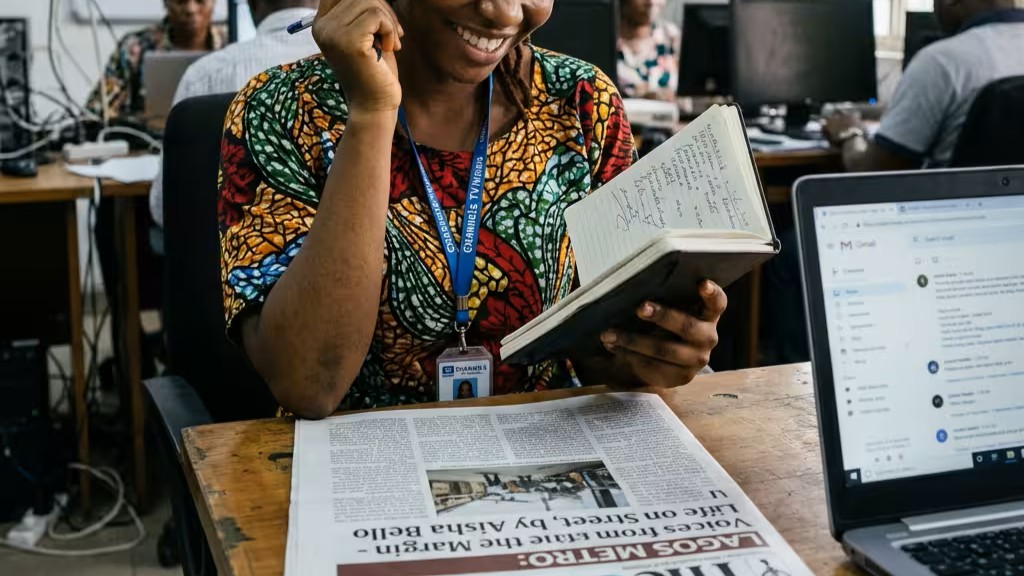
Keep a notebook that no editor ever sees. In it, write the details that did not fit the story — the way the widow’s hand shook when she signed the affidavit, the smell of the mechanic’s workshop, the specific brand of soft drink on the councillor’s desk. You are not writing this for publication. You are writing it because journalism is an act of noticing, and the muscle of noticing must be exercised even in the sentences no one will ever read.
That notebook, in twenty years, will be the most valuable thing you own.
Yours in the trade,
Kehinde Bamigbetan
Leave a Reply