
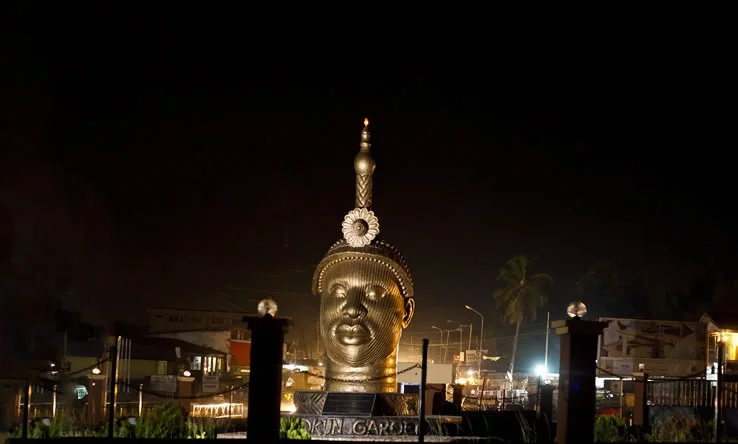
There is a way the light falls on the Ooni’s palace in the late afternoon — a slanted, honey-coloured light that seems to remember older centuries — that I have never seen replicated anywhere else in the world. I grew up in that light. It is the light I carry with me into every editorial meeting, every council chamber, every ministerial office.
I was born on March 30, 1965, in Ile-Ife, Osun State — a town the Yoruba believe the world began. That single accident of geography has shaped every decision I have made since.
The Inheritance
To be an Ile-Ife son is to inherit a specific kind of confidence and a specific kind of obligation. The confidence comes from knowing you were born at the beginning of a story that includes Oduduwa, Oranmiyan, and Moremi Ajasoro. The obligation comes from knowing that the story is not finished, and that you have been handed a page.
My father, God rest his soul, would force me to read newspapers from the age of thirteen. He would drop Daily Times on the dining table every evening and expect a summary before dinner was cleared. If my summary was thin, dinner was long. If it was thoughtful, we spoke into the night. I resented it at the time. I have thanked him, in silent prayer, every day of my working life since.
The Cradle Teaches Patience
Ile-Ife teaches patience in a way modern cities cannot. Lagos rewards speed. Ile-Ife rewards depth. In Lagos, the man who arrives first at the meeting is the one who is respected. In Ile-Ife, the elder who speaks last is the one who is remembered.
I have spent my working life in Lagos. But I have made my most important decisions with the pace of Ile-Ife.
What We Owe the Town That Made Us
Every year, I return to Ile-Ife. I sit with elders in compounds whose names have not changed in eight centuries. I listen to stories I have heard before, told slightly differently, and I understand each time that the difference is the whole point. The Yoruba do not repeat a story. They renew it.
There is a debt every Ile-Ife son carries. It is not a debt of money. It is a debt of custodianship. The town that gave us our name expects, in return, that we do not shame it in the places we go.
I have tried, in forty years of public life, to keep that promise. I do not always succeed. But I do not stop trying.
Because the light on the Ooni’s palace, at dusk, is watching.
Leave a Reply